



05.05.2020 / Comunicado de prensa
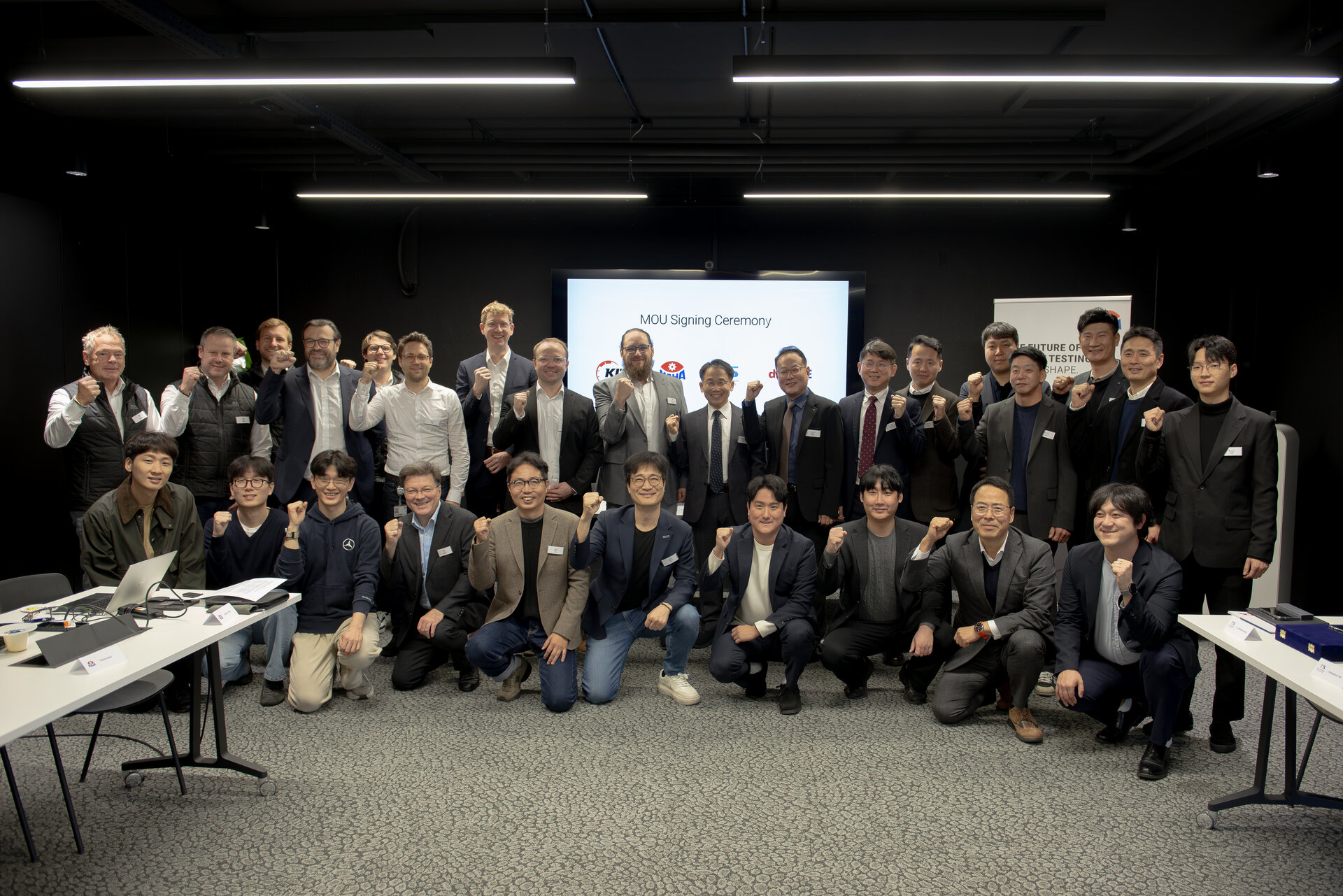
Haldenwang, November 25, 2026. Korea aims to integrate functional testing of advanced driver assis-tance systems (ADAS) nationwide into periodic technical inspection (PTI) in the future. As a technology partner, MAHA is contributing its MAST 2.0 test bench to the development of the inspection procedure. The test technology is to be developed and trialed by the end of 2028, with the goal of putting the first test benches into operation from 2029 and subsequently rolling them out nationwide. During the two-day meeting, the partners reviewed the current state of development, saw the MAST 2.0 in live opera-tion and defined the steps toward the first pilot systems.
Shared goal, combined expertise
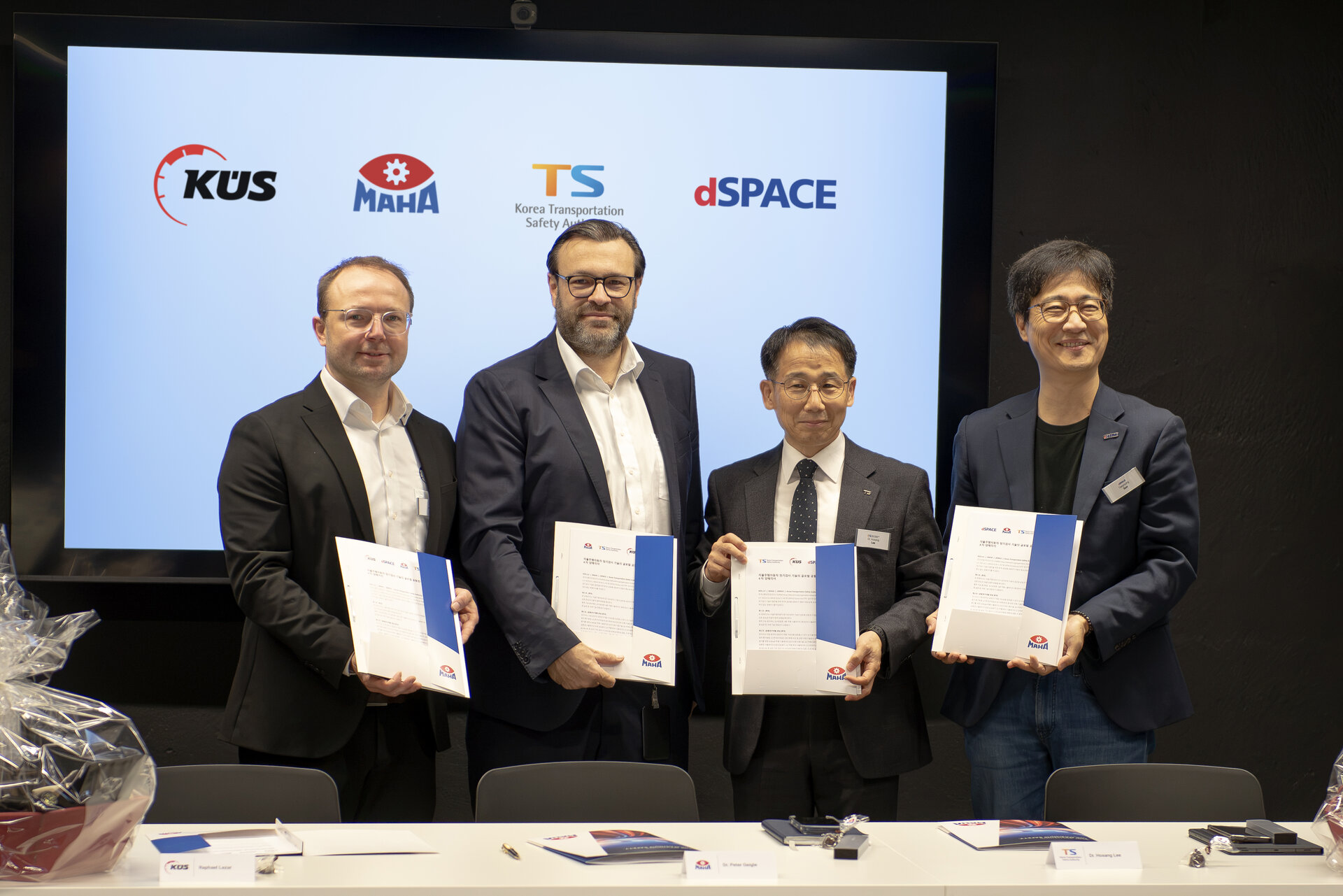
In addition to a 13-member KOTSA delegation, representatives of dSPACE Germany and dSPACE Ko-rea, KÜS and Mercedes-Benz Korea attended; Hanyang University joined online. The common goal: an economically viable functional test that reliably detects relevant ADAS faults in the vehicle fleet. “By signing the MoU, we are reaffirming our shared path. What we saw in Haldenwang shows that objec-tive and reproducible ADAS testing in regular inspection operations is within reach,” says Dr. Jaehwan Jeong, Head of the Advanced Safety Research Department at KOTSA.
The MoU lays the foundation for joint research on the periodic technical inspection of automated vehi-cles. KÜS contributes its experience with German and European PTI systems, MAHA its test bench technology for vehicle dynamics and steering, and dSPACE Korea the simulation of camera, radar and LiDAR, including synchronization with the test bench. KOTSA provides the Korean inspection frame-work and demonstrations with real vehicles, drawing on hands-on experience: at the Sejong Vehicle In-spection Center, KOTSA already operates its ADAS functional testing system KADAS, which has sup-ported functional testing of around 470 vehicles to date.
Targeted scenarios, clear results
Periodic inspection does not need to recreate every conceivable traffic situation – what matters is a re-liable statement on whether a system works. Hanyang University presented an AI-based approach in which large language models generate, simulate, evaluate and automatically optimize test scenarios. The scenarios are validated on real vehicles with both intact and verifiably faulty systems, in coopera-tion with vehicle manufacturers.
Close to the project, close to the market
“ADAS inspection depends on authorities, testing organizations, simulation specialists, academia and manufacturers sitting at the same table. That is exactly what we achieved in Haldenwang,” says Dr. Peter Geigle, Managing Director of the MAHA Group. To support the project and future operators local-ly, MAHA is setting up its own subsidiary in Korea.

